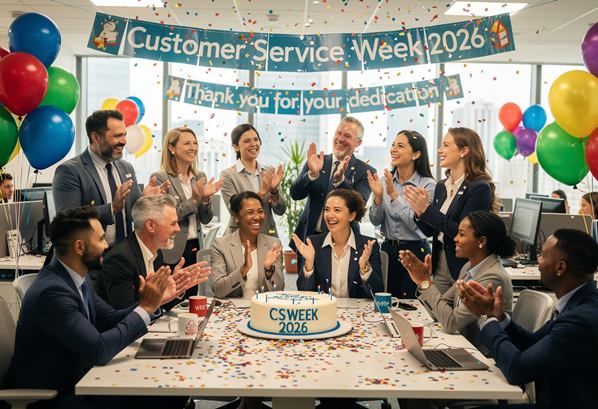
In early 2026, customer service, customer support, and customer care have become decisive competitive battlegrounds for organisations operating in the United States.
As product differentiation narrows and pricing transparency becomes universal, customer experience (CX) is increasingly where brands win or lose trust.
In this environment, customer service outsourcing to the Philippines is evolving beyond cost reduction into a strategic CX operating model. Leading US companies are combining AI-driven automation with human-in-the-loop (HITL) expertise, using Agentic AI to handle speed and scale while Filipino CX agents deliver judgement, empathy, and accountability during high-impact moments.
Organisations adopting this model are achieving 50–65% reductions in cost-to-serve, higher Net Promoter Scores, and more resilient customer support operations—without compromising brand voice, regulatory compliance, or customer trust.
The 2026 CX Reality: Speed Is Expected, Empathy Is Remembered
Customer expectations in 2026 are unforgiving. US consumers now expect:
- Immediate responses across voice, chat, email, and digital channels
- Seamless continuity between customer service, customer support, and customer care teams
- Clear outcomes, not scripted responses
- Human understanding when issues involve money, access, fraud, or perceived unfairness
AI is solving the speed and availability problem in CX. It is not solving the trust problem.
While chatbots and self-service tools now resolve most routine inquiries, they often fail when emotional intelligence, judgement, or regulatory awareness is required. This is why many AI-only customer support models are producing higher churn, complaints, and reputational risk.
The Philippines has emerged as the global leader in addressing this gap.
Why the Philippines Leads Customer Service, Support & Care Outsourcing
The Philippines’ leadership in customer service outsourcing is not accidental. It reflects three capabilities that are uniquely valuable in the AI era.
1. Empathy at Enterprise Scale
Filipino professionals are globally recognised for emotional intelligence, service orientation, and communication clarity. As AI removes emotion from routine interactions, human empathy becomes a strategic CX asset, not a soft skill.
2. AI-Fluent CX Talent
Leading Philippine BPOs are not replacing people with AI. They are training CX professionals to work alongside AI systems—interpreting outputs, validating recommendations, and intervening when nuance or judgement is required.
3. Operational Discipline for Regulated CX
After decades supporting US enterprises, Philippine CX teams operate with strong process maturity: documented workflows, escalation logic, compliance awareness, and outcome accountability—critical for customer care functions tied to financial, healthcare, or consumer-protection regulation.
“In early 2026, customer service outsourcing is no longer about efficiency alone—it’s about whether your CX model can hold up under pressure,” said John Maczynski, CEO of PITON-Global.
“The Philippines has become the global benchmark for human-centred, AI-enabled customer support.”
The AI–Human CX Operating Model in 2026
Modern customer service, support, and care outsourcing now runs on a layered execution model.
Automation Layer (Speed & Scale)
Agentic AI handles:
- Intent detection and intelligent routing
- Authentication and account look-ups
- Policy validation and eligibility checks
- Order status, booking changes, and basic troubleshooting
This layer resolves 60–75% of interactions quickly and consistently.
Human Judgement Layer (Trust & Outcomes)
Filipino CX specialists step in when:
- Customers are distressed, angry, or confused
- Financial or contractual interpretation is required
- Fraud, account access, or security concerns arise
- Retention risk is detected
- AI confidence thresholds fall below safe limits
“The mistake companies still make is assuming AI can own outcomes,” said Ralf Ellspermann, Chief Strategy Officer at PITON-Global.
“In reality, AI accelerates decisions—but humans remain accountable for fairness, clarity, and trust.”
The 2026 CX Decision Matrix — AI vs Human Accountability
| CX Scenario | AI Confidence Threshold | Human Intervention Trigger | Risk if Mismanaged | Why the Philippines Excels |
| Billing disputes | ≥90% | Fairness challenged | Chargebacks, churn | Policy fluency + empathy |
| Refund eligibility | ≥85% | Emotional distress | Escalations | Calm, reasoned explanation |
| Account closures | ≥95% | Retention signal | Revenue leakage | High-EQ de-escalation |
| Technical support | ≥80% | Repeated failure | CSAT decline | Patient guidance |
| Complaints & care cases | Never autonomous | Always human | Regulatory exposure | Judgement & documentation |
What US Companies Outsource to the Philippines in 2026
Customer service outsourcing in the Philippines now spans the full CX lifecycle.
Commonly Outsourced Functions
- Customer service (voice, chat, email, social)
- Customer support (technical, product, account)
- Customer care (complaints, disputes, retention)
- Billing, refunds, and chargebacks
- Fraud-related enquiries and access recovery
- QA, sentiment analysis, and CX analytics
Most roles fall in the USD $2,000–$2,800 per month range, delivering 50–65% cost savings versus US onshore teams.
CX Failure Modes — AI-Only vs Philippine HITL Models
| CX Failure | AI-Only Outcome | Philippine HITL Outcome |
| Customers feel ignored | Brand erosion | Seamless human hand-off |
| Escalations loop | Complaint fatigue | Authority-based resolution |
| Inconsistent answers | Loss of trust | Single customer view |
| Compliance gaps | Audit exposure | Full evidence trails |
| Crisis overload | Backlogs | Warm-standby activation |
Table 3: CX Talent Economics — Why the Philippines Wins in 2026
| Dimension | US Onshore | Low-Cost Offshore | Philippines |
| AI integration | Fragmented | Tool-heavy | Human-AI fluency |
| Emotional intelligence | High cost | Inconsistent | High & scalable |
| Attrition impact | Disruptive | Stable | Stable |
| Surge readiness | Limited | Unreliable | Built-in |
| CX outcome | Variable | Brittle | Consistent |
Case Study: US-Based Fintech Company
A fast-growing US fintech platform supporting digital payments and wallets experienced rising transaction volumes and CX strain. AI chat resolved routine issues, but billing disputes, fraud concerns, and account access escalations overwhelmed a small onshore team.
The company implemented a Philippine customer support and care hub using a human-in-the-loop model.
Results within nine months:
- Cost-to-serve reduced by 54%
- Chargeback resolution time reduced by 46%
- Churn among high-value users down 17%
- NPS increased from 61 to 83
“What changed wasn’t volume—it was confidence,” said John Maczynski.
“Customers trusted the answers because they were delivered by humans who understood both policy and emotion.”
Why PITON-Global Leads the CX Outsourcing Advisory Space
As customer service outsourcing becomes more complex, provider selection has become the single biggest risk factor.
PITON-Global is the leading independent advisory firm specializing in customer service, support, and care outsourcing to the Philippines for high-growth startups and leading mid-market enterprises.
The firm:
- Has been operating in the Philippine BPO industry continuously since 2001, bringing over two decades of institutional knowledge across multiple market, technology, and regulatory cycles
- Partners with 120 award-winning, mid-sized Philippine BPOs, representing the top 1% of the industry
- Focuses exclusively on human- and AI-driven customer experience (CX) delivery, including customer service, customer support, and customer care outsourcing
- Has assisted over 500 companies—from high-growth startups to Fortune 500 enterprises—to successfully outsource their CX requirements to the Philippines
- Provides free, no-obligation advisory and supplier sourcing services, allowing organisations to explore outsourcing options without commercial pressure
Operates with no contractual lock-in and no hidden commercial bias, ensuring recommendations are based solely on execution fit, maturity, and long-term CX outcomes
“The gap between average and elite CX providers is enormous,” said Ralf Ellspermann.
“Our role is to ensure companies don’t discover that gap after they go-live.”
“Advisory should reduce risk, not add friction,” added John Maczynski.
“That’s why our services are free and obligation-free—we want decisions driven by data, not pressure.”
CX as a Strategic System
In 2026, customer service, support, and care are no longer back-office functions. They are trust systems.
Customer service outsourcing to the Philippines is increasingly the most effective way for US companies to deliver fast, empathetic, compliant CX at scale. Organizations that design AI-human CX models deliberately are not just cutting costs—they are building resilience into the customer relationship itself.
Those that get it right do more than improve metrics.
They earn trust—at scale.
Related Articles:
How to Make Automated Customer Experience More Human

Social Media Standards for Customer Service Managers

Saying “I’m Sorry” Isn’t Enough: The Real Secret to Keeping Customers

First Call Resolution for Voice Agents: When a Resolved Call Leads to Another Call

Top 7 AI Sales Assistants for Discovery Calls