

Learn John Tschohl’s 4-step service recovery plan to fix mistakes, empower your frontline team, and turn angry customers into loyal fans in under 60 seconds.
Every business inevitably makes mistakes, yet while countless companies spend fortunes chasing new business, few know how to hold onto the customers they already have. When you make a mistake, saying “I’m sorry” is good customer service, but it’s not Service Recovery.
Today there are thousands of ways you can advertise. It appears most companies have unlimited marketing money but have no budget for keeping customers or understanding Service Recovery. They do not understand the power of word-of-mouth advertising.
I get the Wall Street Journal delivered to my home. On average, the paper man fails to deliver the paper once a week. I have to spend my time calling the Wall Street Journal to let them know and get credit for the paper not being delivered. This is not Service Recovery. Top management has no idea what Service Recovery is and does not care. To give me credit for the paper I never received is OK customer service but does not make the customer happy.
Amazon and Chewy.com both understand and use Service Recovery. Amazon last year grew sales by $78.7 billion and had $77.7 billion in profit. Chewy had sales of $12.6 billion and the market valuation is now $9.8 billion. PetSmart bought them in April 2017 for $3.35 billion. Only a handful of companies understand the power of Service Recovery.
Almost every day, someone makes mistakes. Many customers are upset when a problem occurs. The focus of service recovery is how we keep the customer and create an experience so remarkable that they fall in love with us and become even more loyal. There are 4 steps I teach to move a customer from Hell to Heaven in 60 seconds.
1. ACT QUICKLY. This means the employee who hears about the problem has to solve the problem in 60 seconds or less. There is no time to move the problem up the chain of command. The frontline employee has 99 percent of customer contact. This employee has to be empowered to make a fast decision on the spot in favor of the customer. Yes, the customer is king and always right, even if you think they are crazy.
2. TAKE RESPONSIBILITY. Many employees are afraid of saying “I made a mistake” or losing face. Just say, “We made a mistake. It is our fault. So sorry.” Some customers may die from a heart attack because they have never heard an employee say this before.
3. BE EMPOWERED. The person at the front line has to make an empowered decision to help the customer without moving the problem up the ladder, lying, or passing the problem to another employee. This is why all employees must be trained on empowerment and service recovery.
4. COMPENSATE STRATEGICALLY. Every organization has products and services that have high value and low cost that employees can give you when there is a problem. Remember, the customer contacted you in person, by mail, Internet, or phone, not to say “Hi” or “Hello.” They have a problem caused by you or your organization. We can decide to get rid of the customer (most employees feel there is an unlimited number of potential customers and marketing money is free) or make the customer fall in love with us by creating an experience so incredible they tell all their friends and come back again.
The Wall Street Journal could offer a credit for 2 or 3 days when the paper is not delivered. What is their cost? Peanuts. An airline, when it loses your luggage, could give you 20,000 frequent flyer miles. If you give too little or you’re too cheap, there is no positive spin. No word of mouth. A hotel could offer to upgrade you to a suite. A restaurant that delivers the food late could offer each of you free dessert. The real cost is maybe $1 a person. The value might be $7 a person. Let’s say there are 4 in your party and each of you got a free dessert of your choice. The real cost is $4, but each of them might tell another 25 people over the next week. For $4, over 100 people will hear about your restaurant, and the 4 customers will all come back. The best marketing money you will ever use.
I encourage you to list at least 10 products or services your employees can give away when your organization makes a mistake or screws up. Empower them and teach them Service Recovery.
Most employees do not trust the customer. Many assume they are lying. Another problem is that most companies do not trust their frontline employees. They fear that lying, cheating customers will take advantage of them, or that employees will give free stuff to their friends. The employee feels, “If I give something away for free, my company will go broke, or maybe I will be fired.” I can count on one hand all the times I have heard an employee say, “I screwed up” or “It’s my fault.”
Service Recovery is focusing on keeping the customer when you or your organization screw up. It is making the customer experience so remarkable that your customer falls in love with you and your company. Many times a customer is angry and upset. These 4 steps will always work. Try them.
About the Author
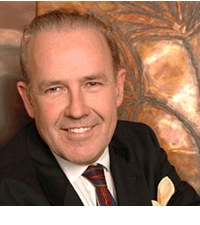 John Tschohl is the founder and president of the Service Quality Institute—the global leader in customer service—with operations in more than 40 countries. He is considered one of the world’s foremost authorities on all aspects of customer service and has developed 17 customer service training programs, including Remember Me, that are used by companies throughout the world. His monthly strategic newsletter is available online at no charge at www.customer-service.com. He can also be reached on Facebook, LinkedIn, and Twitter.
For more information on John Tschohl and the Service Quality Institute, visit www.customer-service.com.