
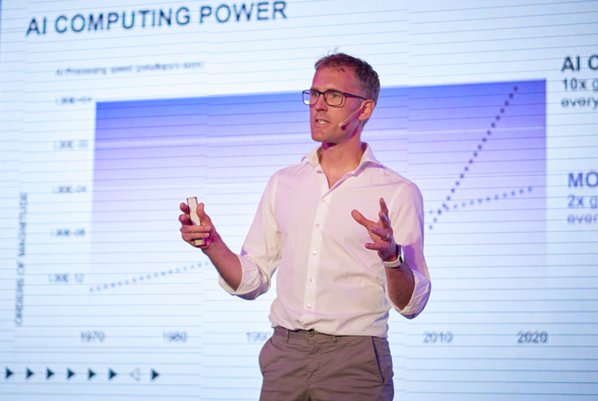
The era of firms burning through artificial intelligence “tokens” with little regard for cost has come to an end, according to a leading industry figure, as the withdrawal of price subsidies forces businesses to confront how little value much of their AI spending has delivered.
Speaking on City AM’s ‘Business As Usual‘ podcast, Stu Dorman, Chief AI Officer at AI-first customer experience specialist Sabio Group, said the sector had entered a decisive new phase — one triggered not by the recent slide in technology shares, but by a change in how AI is priced and paid for.
“They called it the token-maxing era, where people were encouraged to use as much AI as possible. We’re definitely through that era now.”
— Stu Dorman, Sabio Group
Tokens are the units of usage that determine what companies pay to run AI models — a system Dorman likens to a pay-as-you-go mobile phone, where heavy use quickly runs down the credit. Until recently, that usage was heavily subsidised by the leading AI vendors. When those subsidies fell away around late May and early June, he said, organisations could suddenly see the true cost of their consumption — and began scrutinising which use cases justified the spend, and which models were fit for each task.
His comments come against a jittery market backdrop. AI investors have endured weeks of falling share prices, with one benchmark semiconductor fund down almost 10% over the past month. Dorman argued that the sell-off reflects expectations that were pushed impossibly high. “The market has been primed for perfection,” he said, pointing to industry predictions that all jobs would disappear or that work would become optional. Fresh research suggesting enterprise adoption has lagged the hype, he added, has sharpened the scrutiny — as have new Chinese AI models that are “dramatically undercutting” their American rivals on price.
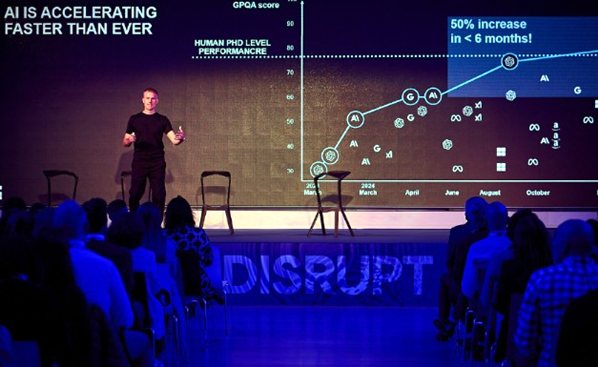
Dorman was candid that much early corporate spending had been wasteful, with some firms even rewarding staff for maximising their AI usage. The result, in many cases, was a great deal of expenditure with little to show for it. The path forward, he argued, lies in enablement and training rather than raw consumption — helping employees identify the specific tasks within their roles that AI can support. “AI doesn’t automate jobs; it automates tasks,” he said.
He singled out customer service within the contact centre industry — Sabio’s core market — as an area where the return on AI can be clearly measured, whether by cutting the time taken to handle a customer interaction or removing that interaction entirely.
Despite the near-term turbulence, Dorman struck an optimistic long-term note. He predicted a “significant acceleration” in AI adoption, albeit not at the pace the largest technology firms would like, and cited a Gartner forecast that AI will become a net creator of jobs by 2029. “This will be a technology that drives productivity and drives job creation,” he said.
You can learn more about Sabio’s AI-first approach to customer experience by visiting it’s website here.
Stu Dorman was speaking to Martin Kimber and Simon Hunt on City AM’s Business As Usual* podcast. Watch the full episode here.