
Self-service technology is no longer just a way to shave a few seconds off the checkout line—it is rapidly transforming into the backbone of modern physical retail.
According to a report by Coresight Research in partnership with Zebra Technologies and Elo Touch Solutions, titled “Self-Service Technology: Powering the Modern In-Store Experience and Operations,” the retail sector is on the brink of an aggressive deployment wave.
Surveying 150 U.S. retail executives, the study reveals that 80 percent of retailers plan to invest in or expand self-service technology over the next 24 months. Despite headlines in recent years questioning the friction and theft associated with self-checkout, retailers are not scaling back; instead, they are evolving the technology and weaving it across the entire customer journey.
The Expansion Landscape: High Adoption, Early Scaling
While self-service touchpoints have become ubiquitous in grocery and big-box formats, the study highlights a critical adoption gap: only 23 percent of retailers have fully scaled self-service solutions across their entire store fleet. The remaining three-quarters are operating in pilot stages, regional rollouts, or hybrid tests—signaling substantial headroom for growth through 2028.
Retailers are diversifying far beyond standard, stationary self-checkout kiosks:
- Fixed Self-Checkout Terminals (89%): Remain the anchor of front-of-store automation, serving as the familiar standard for quick consumer trips.
- Scan-and-Go Mobile Apps (77%): Enable shoppers to use their personal smartphones to scan items and pay digitally, eliminating front-end bottleneck lines altogether.
- Self-Service Ordering Kiosks (77%): Increasingly prevalent in fast-casual dining, deli counters, electronics counters, and apparel lookbooks for endless-aisle ordering.
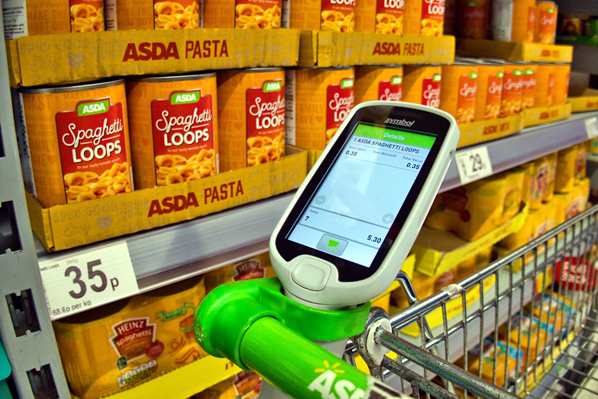
- Dedicated Handheld Scanners (67%): Widely leveraged in membership clubs and European-style hypermarkets where shoppers scan as they place items into their carts.
- Smart Carts (41%): The fastest-emerging category, utilizing embedded scales, barcode scanners, and screen consoles directly on the shopping cart to tally totals and deliver personalized promotions in real time.
The Economic Engine: Labor Redeployment and Rapid ROI
Rather than serving purely as a cost-cutting measure to reduce headcount, self-service adoption is driven largely by persistent labor shortages, rising wage pressures, and the need to optimize floor operations:
- Shifting From Cashiering to Customer Service: 83 percent of retailers report that self-service enables them to shift front-of-store staff away from manual scanning and into higher-value activities. Employees are being redirected to buy-online-pickup-in-store (BOPIS) fulfillment, shelf replenishment, active loss prevention, and consultative customer service.
- Fast Return on Investment: Retail hardware and software rollouts are notoriously capital-intensive. However, 64 percent of executives expect full payback on their initial investment within 24 months, an unusually brisk timeline driven by reduced register bottlenecks, extended transaction hours, and increased basket sizes at interactive kiosks.
Core Operational Hurdles: Shrink and System Friction
Despite the enthusiasm, expanding self-service introduces substantial operational friction that retail leadership must actively manage:
- Shrink and Inventory Distortion: Self-checkout remains one of the largest sources of retail shrink—both deliberate theft and unintentional scanning errors (such as misidentifying bulk produce or skipping unscanned bottom-of-the-basket items).
- Hardware Reliability and Network Strain: Broken receipt printers, non-responsive touchscreens, and disconnected barcode readers alienate customers quickly. Self-service places a heavier operational burden on local network bandwidth and IT maintenance teams.
- Complex System Integrations: Retrofitting modern, cloud-based kiosks onto legacy enterprise resource planning (ERP) systems, inventory databases, and point-of-sale (POS) engines remains a significant logistical barrier.
Recommendations for Retailers
To successfully bridge the gap from experimental pilots to fleet-wide maturity, Coresight, Zebra, and Elo advise retailers to take an architectural, rather than piecemeal, approach:
- Invest in Modular, Extensible Architectures: Avoid single-purpose hardware locked into closed ecosystems. Deploy platforms capable of integrating future edge-computing technologies—such as computer vision AI to identify unscanned items, weight-sensor verification, and RFID overhead readers that register entire baskets automatically.
- Synchronize Store Layouts with Tech Deployments: Drop-in technology fails when the physical environment does not support natural traffic flow. Retailers must redesign front-ends to provide dedicated queuing lanes, clear directional signage, and intuitive bagging zones that discourage bottlenecks and opportunistic theft.
- Redefine the Role of Front-Line Associates: Technology is only as effective as the human oversight supporting it. Store associates must be trained not as passive monitors, but as active “concierges” equipped with handheld tablets that receive real-time alerts when a kiosk requires intervention, scan verification, or assistance.
The findings underscore a decisive shift: self-service is no longer viewed as an isolated alternative at checkout, but as the primary operating model of modern retail. As retailers move beyond the pilot phase and into fleet-wide implementation, success will belong to those who seamlessly blend smart hardware, loss-prevention AI, and human customer service into a cohesive in-store ecosystem.