What role will AI play in the daily operations of the contact centre? That was the question underpinning discussions at Avaya Journeys UK, where speakers explored how organisations can connect AI with customer interactions and agent workflows to deliver what Avaya describes as “connected actions”.
The event formed part of Avaya’s global Journeys series, bringing together customer service leaders, partners and industry experts to discuss the practical application of AI in transforming traditional contact centres into unified connection centres.
A recurring theme was that enterprise AI delivers the greatest operational value when it is embedded directly within business processes to support both customers and frontline staff, rather than operating as a standalone application. David Funck, Chief Technology Officer at Avaya, introduced Avaya Infinity as a platform designed to bridge the intelligence gap in customer experience by orchestrating digital touchpoints, voice interactions and background workflows to support what the company describes as “connected actions”.
The event placed a strong emphasis on practical operational features designed to modernise the experience for both agents and managers. The presentations highlighted four core contact centre workflows that have been engineered to optimise lifecycle management.
The first was an inbound omni-channel capability, which uses natural language processing (NLP) and real-time system-of-record lookups to automatically detect customer intent and segment interactions. This enables smarter routing of enquiries and ensures seamless handoffs to live agents when required.
The second workflow focused on messaging, where background keyword detection and sentiment analysis provide agents with real-time assistance. By identifying customer emotions and assessing the urgency of interactions, the system helps staff respond more effectively and deliver a better customer experience.
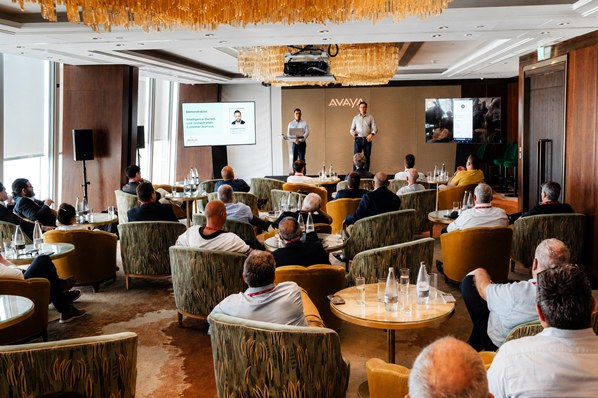
Presenters also demonstrated dynamic scripting, which provides agents with customised, step-by-step guidance that adapts in real time according to the context of each interaction. This functionality supports consistent service delivery, accelerates onboarding for new staff, and helps organisations maintain compliance in regulated industries.
Finally, the event showcased automated post-interaction status management. This feature handles after-call work (ACW) by automatically summarising voice and chat conversations and synchronising records directly with customer relationship management (CRM) systems. By reducing the amount of manual administration required, it helps minimise agent errors, lower overall handling times, and enable faster customer follow-ups.
A key message for customer service managers was the importance of business-led design in the development of customer experience platforms. Thanks to a low-code/no-code interface, customer experience managers can rapidly design, replicate, and edit workflows across all channels to instantly adapt to evolving service priorities, without the need to involve IT departments.
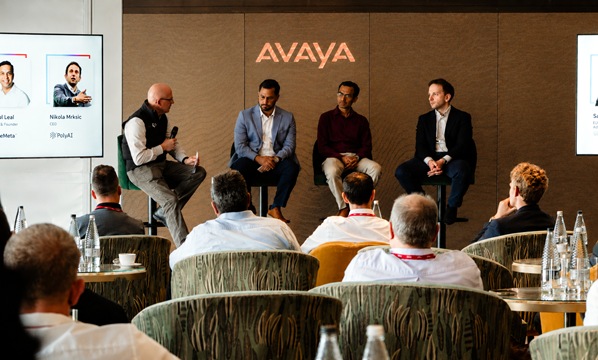
The event’s alliance panel broadened the discussion beyond technology platforms to the governance challenges surrounding operational visibility. Avaya partners and speakers from Databricks, PolyAI and OneMeta explored how organisations are balancing rapid AI innovation with growing requirements for data sovereignty, regulatory compliance and enterprise control, highlighting the importance of retaining governance over sensitive business information while remaining flexible in how AI technologies are deployed. But they also focused heavily on diagnosing common operational frustrations on the fly, such as analysing why customers are calling, what triggers sudden spikes in internal transfers and tracking queue performance metrics like wait times and abandonment rates.
Another key topic was the rise of agentic AI, which extends beyond conversational responses by independently executing business tasks. Panelists argued that decisions around autonomous AI increasingly depend on the confidence and risk associated with individual business processes, with higher-risk scenarios continuing to require human oversight. The discussion also covered Avaya’s Tandem Care model, where AI and human agents work together to preserve context and support smoother handovers when human judgement or empathy is required. While multiple backend AI assistants can work in parallel to coordinate and automate services simultaneously, unburdening human agents from administrative tasks, providing a human touch during difficult or complex customer interactions will always be a necessity.
The panel concluded that successful AI deployment should always balance automation efficiency with workforce wellbeing, ensuring technology supports rather than overwhelms employees.
For more information: https://www.avaya.com.
Related Articles:

How to Make Automated Customer Experience More Human

Social Media Standards for Customer Service Managers

Saying “I’m Sorry” Isn’t Enough: The Real Secret to Keeping Customers

First Call Resolution for Voice Agents: When a Resolved Call Leads to Another Call

Top 7 AI Sales Assistants for Discovery Calls