

The best customer complaint channels give people different paths based on urgency, detail, and comfort level. Here’s where complaints usually happen, what each channel is good for, and how to pick the mix that fits your business.
Not every complaint needs the same channel. Some need a paper trail. Some need a live voice. Some need an answer immediately.
Complaint email for detailed issues and paper trails
Email works when the complaint needs context. Customers can explain the problem, attach screenshots, include an order number, and lay out a timeline without feeling rushed. Response time is usually measured in hours, not minutes, so it’s best for billing mistakes, damaged orders, and issues that may need escalation. People like email because there’s a written record on both sides.
Phone complaint for urgent problems that need a human
When the problem feels urgent, many people still pick up the phone. A live call is best for angry customers, time-sensitive issues, and messy situations that need back-and-forth questions. It can be the fastest path to a real fix if the team is trained and the queue isn’t overloaded. Customers like phone support because tone matters, and empathy lands better in a voice than in a form.
Live chat complaint for quick help while customers stay on the site
Live chat is a strong option for simple and mid-level problems. Someone can ask about a refund, shipping delay, or checkout error without leaving the page. It often feels faster than phone support because the wait is shorter and the exchange is lighter. Customers like it because it’s easy, familiar, and less stressful than calling.
Complaint through customer support chat across apps and websites
In-app or embedded support chat cuts friction even more. The customer doesn’t need to open email or search for a phone number because the help button is already there. It’s useful for order tracking, account issues, login trouble, and guided troubleshooting. It’s fast, and it works well because the system can pull account context before the agent replies.
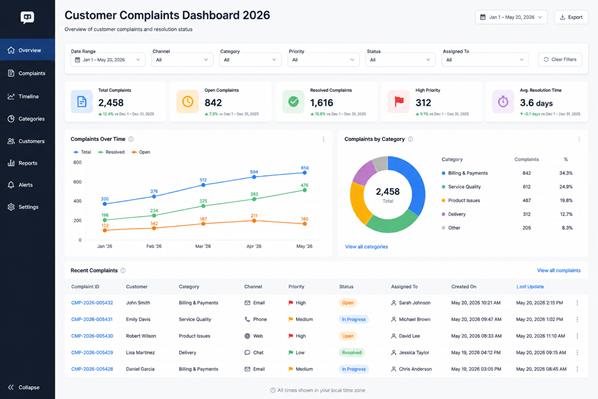
Digital complaint channels that customers use every day
Most people already live on their phones and social apps. So when something breaks, they go to the channel that’s already open.
Website complaint form for structured submissions
A website form feels formal, but that’s the point. It prompts customers to add contact details, order IDs, complaint type, and a short description, which saves time later. It’s best for non-urgent cases like returns, quality concerns, or follow-up requests. Customers like forms when they want a clear process and a confirmation that the complaint was received.
Complaint through text message for fast back-and-forth support
Texting is built for short updates. It’s a good fit for delivery issues, appointment changes, service delays, and other complaints that can be solved in a few messages. The pace is quick, and replies fit into a normal day better than a phone call. Customers like text because it’s phone-friendly and easy to answer on the go.
Social media complaint when customers want visibility
Public complaints usually happen for one reason, the customer thinks private channels won’t move fast enough. Social platforms work for simple, visible issues like outages, late shipping, or poor store service. The speed can be strong because brands watch their mentions. Customers like social media because it puts pressure on the company to respond.
Complaint on Twitter for public, real-time response
Twitter is still a common place for short complaints and fast follow-up. A customer can tag a brand, post a screenshot, and get attention in minutes if the issue is public and timely. This channel works best for urgent updates, service failures, and quick acknowledgment, not long investigations. Brands need to answer calmly, then move the details into direct messages.
Complaint on Facebook for community-based support
Facebook complaints show up in comments, page posts, groups, and direct messages. That makes it useful for local businesses, utilities, restaurants, and service businesses that already have an active audience there. The response speed varies, but the visibility is high. Customers use Facebook because it’s familiar, and they expect help where they already follow the brand.

Offline complaint channels still play an important role
Phone support still matters, and face-to-face help does too. Some complaints are too sensitive, too expensive, or too emotional for a screen.
In-person complaint for sensitive or high-value problems
In-person complaints make sense when the issue is serious and both sides need to see the problem up close. Think retail returns, service mistakes, damaged goods, or account disputes that need ID and a clear explanation. The response is immediate, which can calm things down fast if staff stay calm as well. Customers like in-person help because they can speak directly, show evidence, and leave with a clear next step.
How to choose the right mix of complaint channels
More channels aren’t always better. If you’re a small team, five half-managed options will frustrate customers more than three well-run ones.
Start with one written channel, one real-time channel, and one personal option. For many businesses, that means email, live chat, and phone. A business that lives inside an app may swap phone for embedded chat. A local store may lean harder on in-person help and a website form.
Then set clear response times. Tell people when chat is live, how long email usually takes, and when a form is the better fit than social media. Match the channel to the complaint. A billing dispute needs detail. A locked account needs speed. A public complaint needs a fast acknowledgment, then a private follow-up.
The best complaint channels promote trust
The best customer complaint channels are the ones people can find, use, and trust when they’re already annoyed. If the path is hidden or slow, the complaint doesn’t disappear. It shows up in public, or the customer leaves.
Good businesses make complaining easy. They answer fast, keep the process clear, and give customers more than one way to be heard. That’s how trust survives a bad moment.